top of page
Ephesus Ancient City
Stadium in Ephesus
The Athletic and Spectacle Arena of Ephesus Ancient City

The Stadium in Ephesus was one of the major public venues of Ephesus Ancient City, designed for athletic competitions, public spectacles, and large gatherings. Stretching along a substantial length near the city’s northern area, the stadium reflects the importance of organized entertainment and physical contests in the civic life of Ephesus, Turkey. In the Greek tradition, stadiums were closely associated with athletic festivals and competitive display, while under Roman influence such spaces could also host wider forms of mass entertainment. The Ephesian stadium therefore represents a long-standing cultural tradition that connected public celebration, prestige, and communal identity within the urban world of antiquity.
The significance of the Stadium in Ephesus extends beyond sport, because such arenas also carried political, social, and sometimes religious meaning. Athletic contests in the ancient world were often linked to festivals held in honor of gods or rulers, and public spectacles could reinforce civic pride and social cohesion. In Ephesus Ancient City, where ceremonial life played a central role in the functioning of public space, the stadium would have formed part of a broader network of monuments connected to processions, festivals, and official events. During the Roman period, the use of the stadium may have expanded to include gladiatorial combats or other entertainments that reflected imperial tastes. This combination of Greek athletic heritage and Roman spectacle culture makes the stadium a particularly important monument for understanding the changing character of public life in Ephesus.

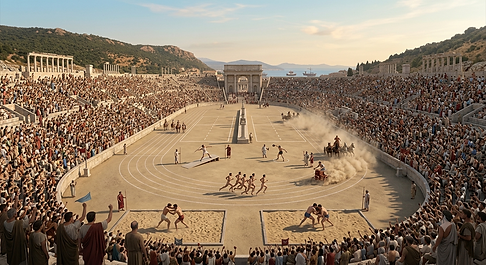
Archaeologically, the Stadium in Ephesus offers valuable evidence for the scale and organization of mass entertainment in the city. Even in its ruined condition, the layout helps scholars reconstruct the physical setting of competitions and the experience of large audiences within Ephesus, Turkey. Its position in relation to other monuments also shows how entertainment spaces were integrated into the broader urban plan. For visitors and historians alike, the stadium reveals that Ephesus Ancient City was not only a center of religion, politics, and commerce, but also a place where collective excitement, festival culture, and public performance played a major role in everyday civic life.
bottom of page