top of page
Ephesus Ancient City
Prytaneion in Ephesus
The Ceremonial and Administrative City Hall of Ephesus Ancient City

The Prytaneion in Ephesus, sometimes described as the city hall of the ancient city, was one of the most important civic buildings in Ephesus Ancient City. Located near the State Agora and other major administrative monuments, it functioned as a central place for official ceremonies, receptions, and the symbolic expression of civic authority in Ephesus, Turkey. In the Greek and Roman world, a prytaneion was not simply an administrative office in the modern sense. It was a building deeply connected with the political identity of the city, where magistrates carried out formal duties, honored guests could be received, and important public rituals were performed. In Ephesus, this made the Prytaneion a key monument for understanding how civic government and ceremonial life were organized.
The importance of the Prytaneion in Ephesus also extended into the religious sphere, because civic administration in the ancient world was closely linked to sacred tradition. One of the most significant features associated with a prytaneion was the sacred hearth, which symbolized the continuity, unity, and divine protection of the city. In Ephesus Ancient City, the building is especially notable for discoveries connected with the cultic and ceremonial life of the urban community, including statues of Artemis that reflect the strong integration of religion into civic identity. This connection shows that the Prytaneion was more than a governmental structure: it was a place where political authority, public ritual, and sacred symbolism came together. In a city famous for the worship of Artemis and for its role as a religious center of the ancient Mediterranean, the Prytaneion helps explain how official governance was shaped by both local cult tradition and broader civic ideology.
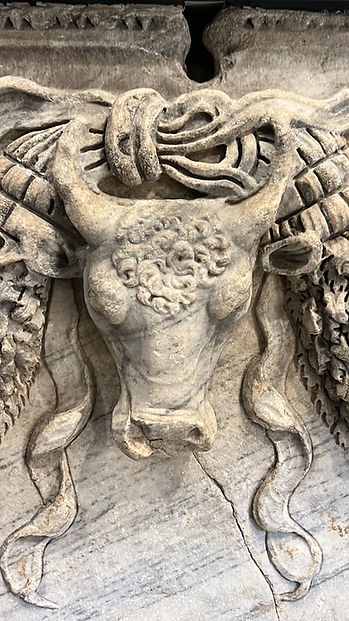

Archaeologically, the Prytaneion in Ephesus is one of the most revealing public buildings for interpreting the institutional life of the city. Its location beside the State Agora and near the Bouleuterion emphasizes its place within a carefully organized administrative and ceremonial district. The remains indicate a formal architectural layout appropriate to its status, and the associated finds provide important evidence for both political and religious functions. For historians, archaeologists, and visitors exploring Ephesus, Turkey, the Prytaneion offers a clear example of how the ancient city united governance, ritual practice, and public representation within a single monumental setting.
bottom of page