top of page
Ephesus Ancient City
Arcadian Street in Ephesus
A Monumental Avenue Linking the Harbor and the Great Theatre

The Arcadian Street in Ephesus was one of the principal ceremonial and commercial avenues of Ephesus Ancient City, connecting the harbor area with the Great Theatre. Also known as the Harbor Street, this broad colonnaded road played a major role in the public life of the city and reflects the urban ambitions of Roman Ephesus, Turkey. Its scale and position within the city show that it was designed not merely for movement, but also for display, processions, and the reception of visitors arriving from the port.
The street is generally associated with a major rebuilding or restoration in late antiquity, often linked to the reign of Emperor Arcadius in the late 4th or early 5th century AD, from whom its modern name is derived. Archaeological remains indicate that the avenue was lined with columns and flanked by porticoes, creating an impressive approach into the city from the harbor. As one of the most visible urban routes in Ephesus Ancient City, Arcadian Street illustrates the continued investment in monumental public space even as the city was adapting to changing economic and environmental conditions, including the gradual silting of its harbor. The road therefore belongs to a long historical process in which the relationship between trade, infrastructure, and urban identity remained central to the development of Ephesus.


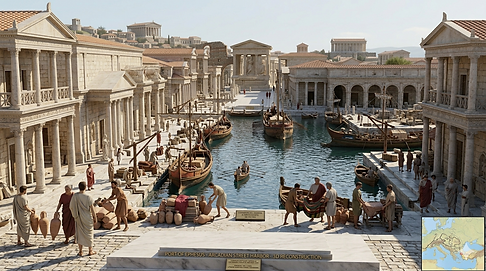
The importance of Arcadian Street in Ephesus lies in the way it reveals the connection between maritime access and the ceremonial image of the city. Its width, architectural framing, and strategic alignment demonstrate how visitors were guided through a carefully planned urban setting from the port toward one of the city’s major public monuments. For the archaeological interpretation of Ephesus, Turkey, the street provides key evidence for the city’s late Roman transformation and for the enduring role of monumental roads in shaping civic experience.
bottom of page